AMMorning
Getting up and washing
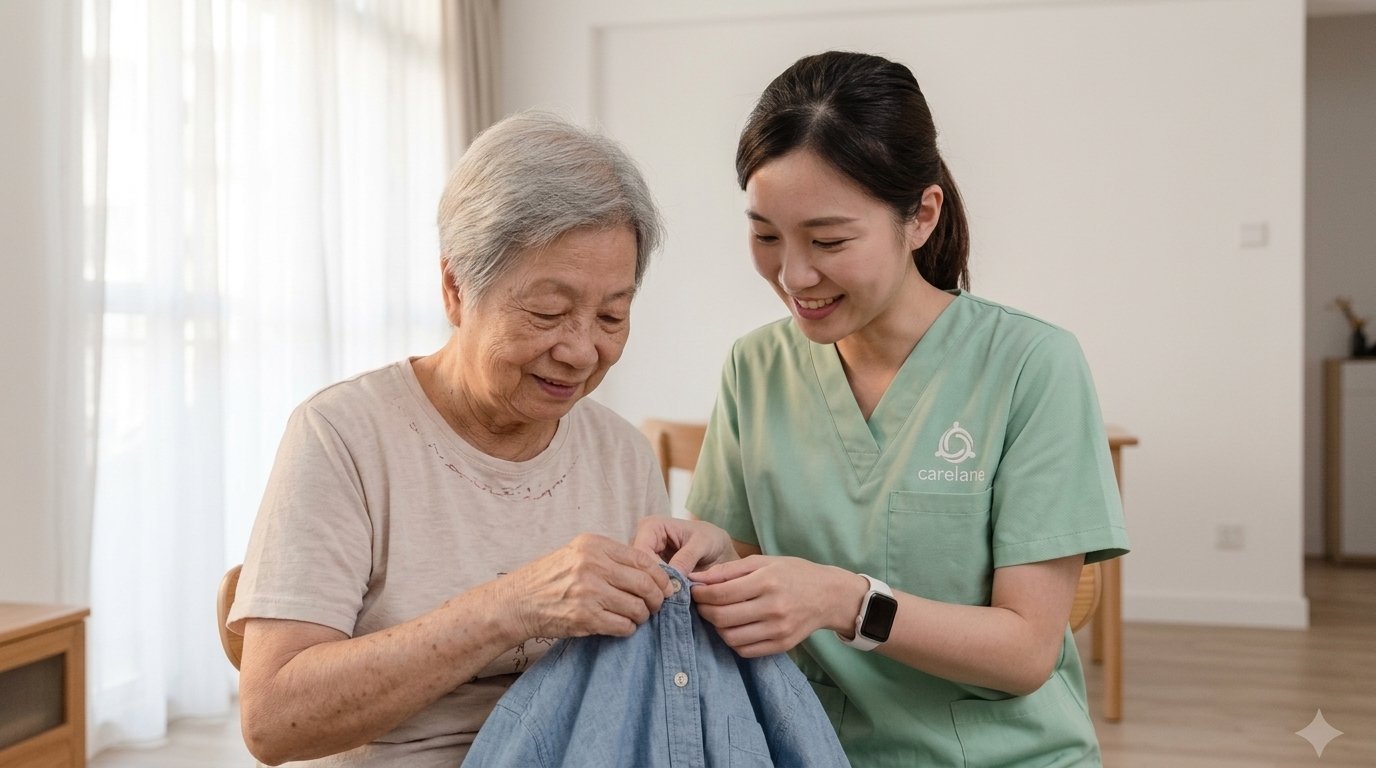
Review bed and chair height, transfers, buttoning and washing routines.
- Sit-to-stand and bed-chair transfers
- Upper-limb and fine-motor skills
- Caregiver assisting position
A qualified Occupational Therapist assesses dressing, toileting, bathing and eating at home, reviews the layout and fall risks, recommends assistive equipment, and shows the family the right way to assist and position.
Dressing, bathing or toileting has become difficult.
Transfers, bathroom areas or thresholds need improvement.
Rebuild upper-limb and daily activity ability.
Use daily routines to support participation and safety.
Choose suitable rails, chairs or daily tools.
Family wants safe handling and cueing methods.
Review home routes and real difficulties directly.
Set goals around dressing, toileting and bathing.
Recommend tools that can be bought, used and reviewed.
Teach family how to assist safely.
Break daily tasks into small steps and practise at home.
Review bed and chair height, transfers, buttoning and washing routines.
Build training into utensils, table access and home walking.
Bathrooms and night toileting carry high fall risk. Review non-slip surfaces and rails.
Major renovation is not always needed. The OT suggests practical changes by ability and home layout.
Select an area ↓
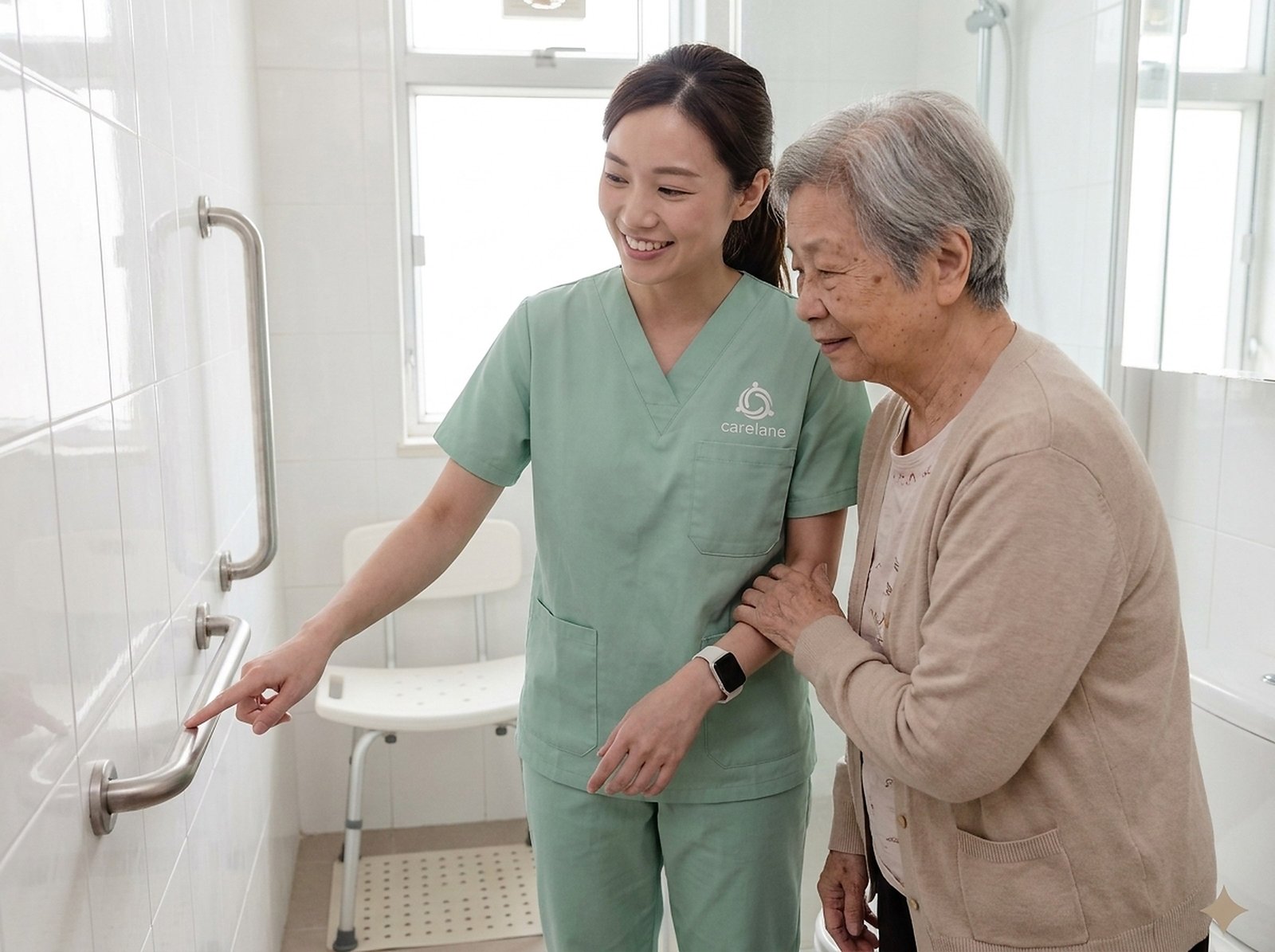
Review slip prevention, rail position, shower-chair height and toilet transfer space.
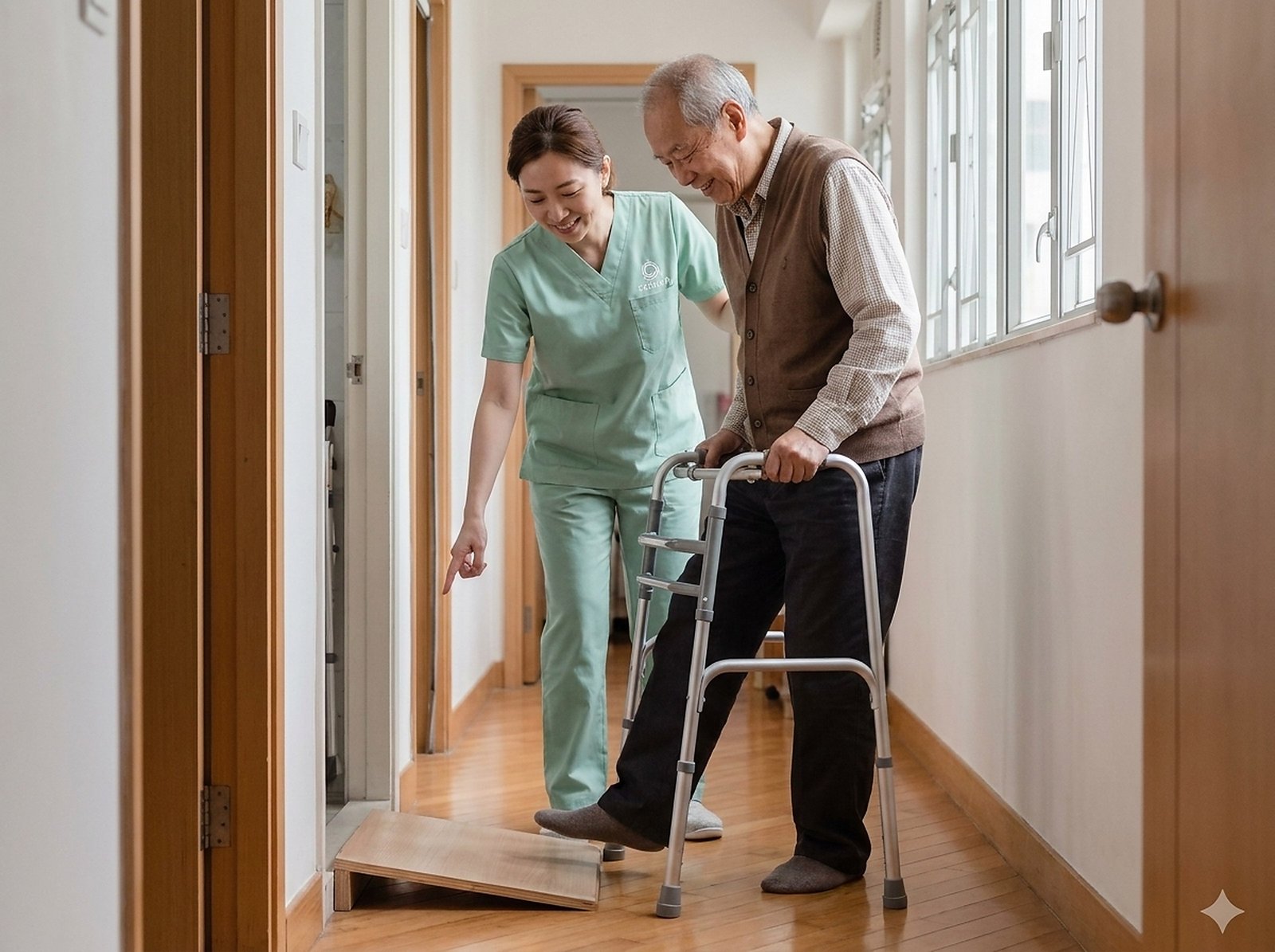
Review corridor width, thresholds, cables, rugs and object placement.
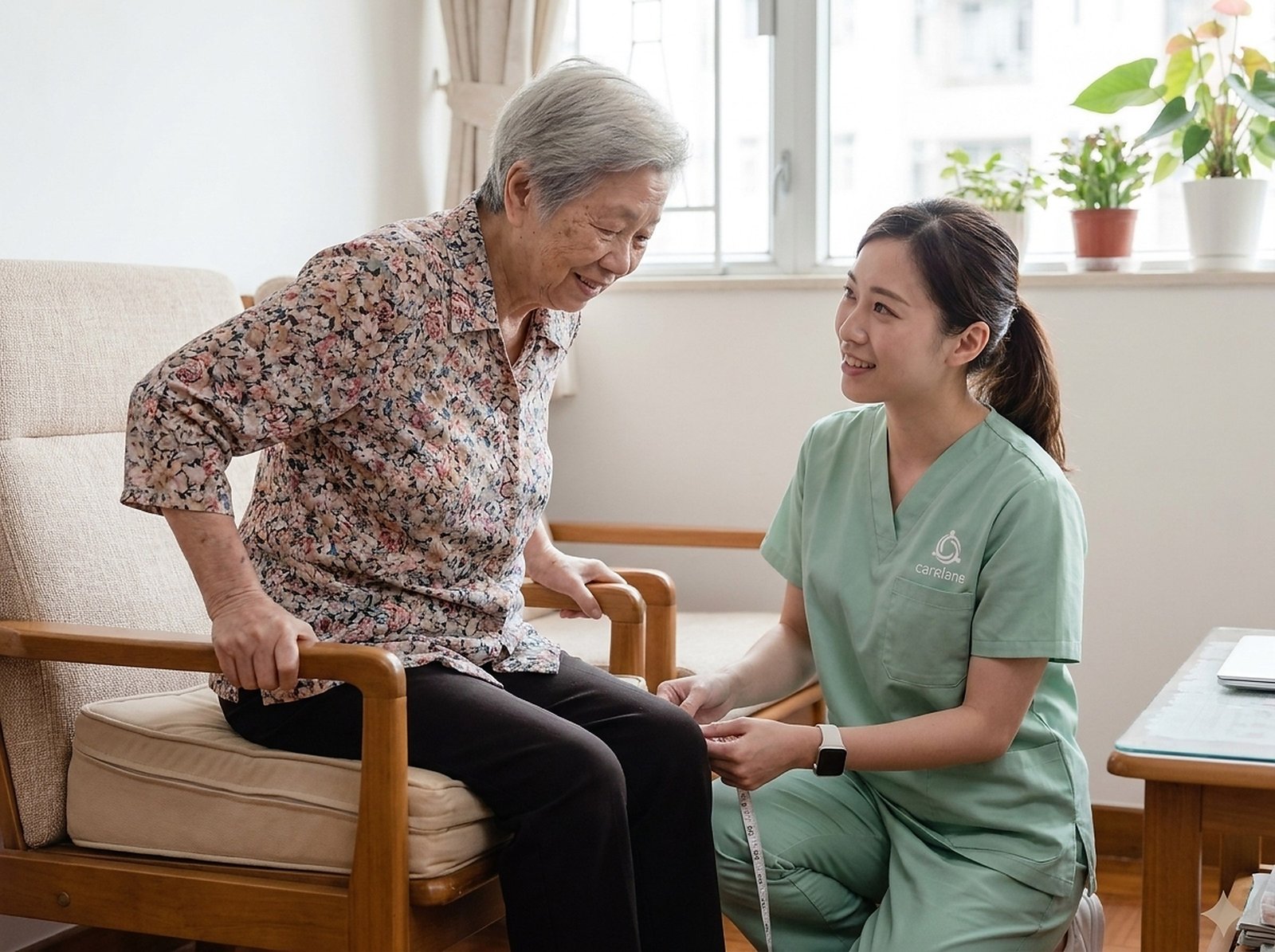
Beds or chairs that are too high or low increase care strain. Height changes can improve transfers.
We first check whether aids fit, then teach safe use to the senior and family.
Allows seated bathing and reduces falls on wet surfaces.
Bathroom safetyProvide support for standing, transfers and toileting.
Transfer supportChoose setup by balance, hand strength and home space.
Steady walkingHelp with eating, buttoning and socks to improve independence.
Do it yourselfAn Occupational Therapist (OT) assesses needs and arranges follow-up training.
Leads assessment, goal setting and aid advice.
Follows up home training under therapist direction.
Helps integrate practice into daily care.
Session frequency depends on ability, home risks and goals.
Good for first checking self-care and home safety.
WhatsApp QuoteSuitable after stroke or functional decline.
WhatsApp QuoteSuitable when family or helpers need guidance.
WhatsApp QuoteThe occupational therapist assesses, sets the training plan and reviews progress; the occupational therapy assistant carries out the training at home to that plan. All rates below include the home visit and basic assessment and training equipment used during the visit; aids or products left for the family are quoted separately — no call-out fee.
One rate for assessment and treatment
1 hour per session · first assessment: 1 hour
at least 4 sessions of the same eligible service prepaid in full, HK$900 each10% off
A Hong Kong registered occupational therapist visits, assesses, sets the plan for the elder’s situation, and reviews and adjusts it as things change.
Carries out the therapist’s plan
Minimum 1.5 hours · about HK$270 from, per session
at least 4 sessions of the same eligible service prepaid in full, 10% off per hour10% off
Training works through frequency and consistency, not the length of any one session. 1.5 hours is what a full session takes — warm-up, the prescribed exercises, then a word with the family. Regular assistant visits under the therapist’s plan keep the training frequent while the long-run cost stays manageable.
Every visit is made by a registered occupational therapist or a therapy assistant working to the therapist’s written plan. Travel is already included.
The occupational therapist assesses first and writes the training plan, the assistant then delivers it at home, and the therapist reviews at intervals. This is the combination families most often use: it keeps the number of training sessions up while holding the cost down.
On twice-a-week training, about HK$2,950 a month (8 assistant sessions totalling 12 hours, plus one therapist review at HK$1,000).
The services above are personal care, nursing procedures and rehabilitation training carried out as instructed by medical staff. They are not medical diagnosis or treatment and do not replace your attending doctor. The 10% discount requires full upfront payment for at least four visits of the same eligible service. There is no expiry date. If the arrangement stops early, completed services and applicable cancellation fees are deducted at standard rates and the balance is refunded. Cancellation with less than 24 hours’ notice costs half the standard fee for that visit; cancellation at least 24 hours ahead is free. Non-prepaid services use standard rates and the usual payment arrangements.
It reviews transfers, bathrooms, thresholds, lighting and daily item placement.
Yes. The focus is reducing fall risk and care strain first.
The OT lists specifications so family can purchase suitable items.
It depends on goals and stamina. It often starts more frequently.
OT focuses on self-care, home safety and practical aid use.
We first understand daily difficulties and the home environment, then suggest suitable support. Phone / WhatsApp: 9185 5217. A first enquiry can start with a free preliminary phone assessment — 10 to 15 minutes, no charge, and no obligation to book.
The 10% discount requires full upfront payment for at least four visits of the same eligible service. There is no expiry date. If the arrangement stops early, completed services and applicable cancellation fees are deducted at standard rates and the balance is refunded. Cancellation with less than 24 hours’ notice costs half the standard fee for that visit; cancellation at least 24 hours ahead is free. Non-prepaid services use standard rates and the usual payment arrangements.
Eligible services: wound care, nasogastric tube replacement, physiotherapy, occupational therapy, speech therapy, therapy assistants and nutrition support. Home care, health workers, housekeeping and medical escort do not automatically qualify; quotations identify the eligible service and number of visits.
We aim to arrange the same staff member, but may change staff according to availability and will notify you beforehand. Basic assessment and training equipment used during the home visit is included; aids or products left for the family require a separate quotation.