
01
Balance and gait
Train weight shift, turning, step length and walking speed.
For unsteady gaitA qualified Physiotherapist assesses strength, balance, gait and pain at home, sets a training direction around the medical advice and living environment, and provides a written assessment report. A therapy assistant can then run the routine sessions and log progress.
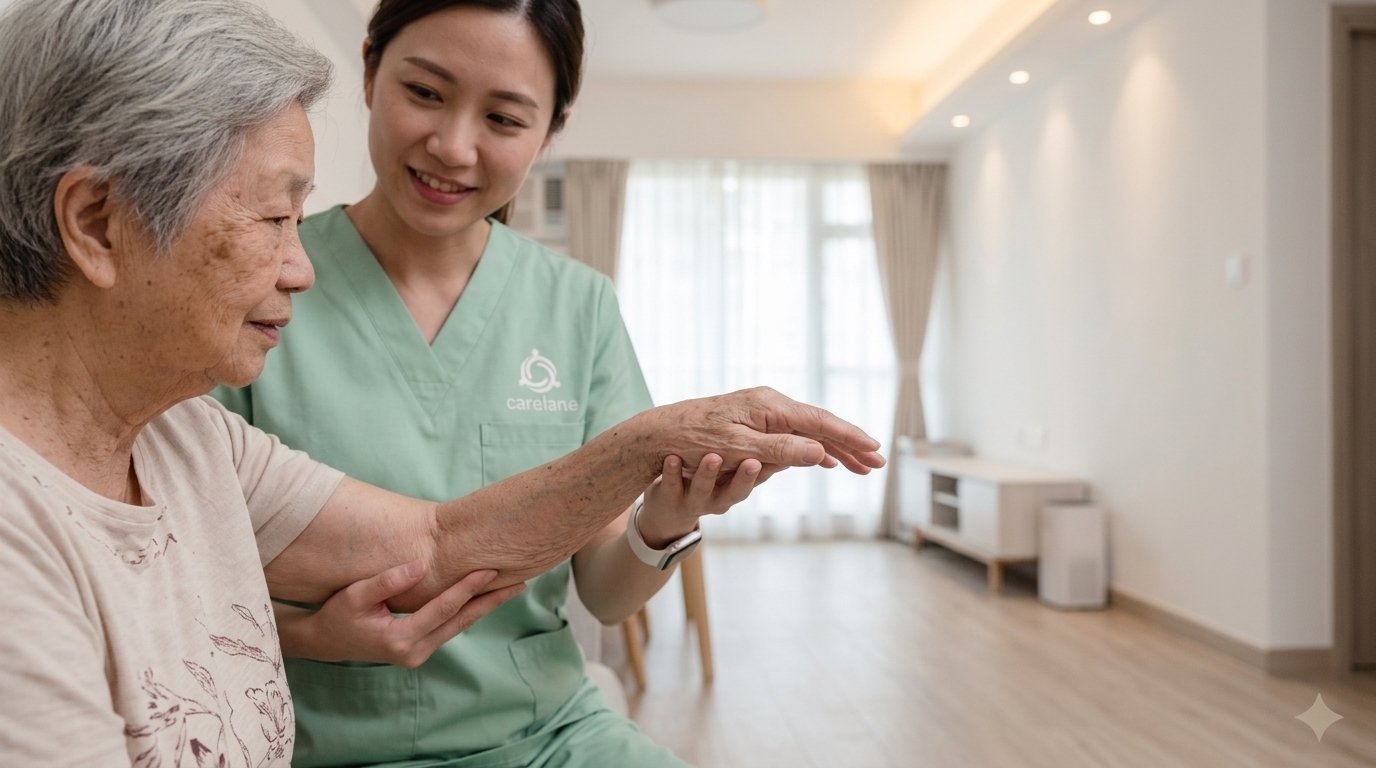
Mobility, pain and safety are managed together.
Improve motor control and walking safety.
Restore joint movement and strength gradually.
For shoulder, neck, back, knee or joint pain.
Train gait, balance and turning.
For falls or unsteady walking needing follow-up.
Maintain mobility and slow physical decline.
Training is matched to assessment and linked to daily movement.
Train weight shift, turning, step length and walking speed.
For unsteady gaitRebuild lower-limb and core strength with gradual exercises.
Standing and stairsUse active and passive movement to reduce stiffness and maintain flexibility.
Improve rangeCombine manual therapy with home care advice.
Ease painTrain motor control, sensation and coordination.
Movement relearningReview real movement risks at home.
Each session links to standing, walking and transfers.
Provide safe exercises that can continue at home.
Use simple measures to track rehab trends.
Each stage has goals, measures and home exercises.
Select a stage below ↓
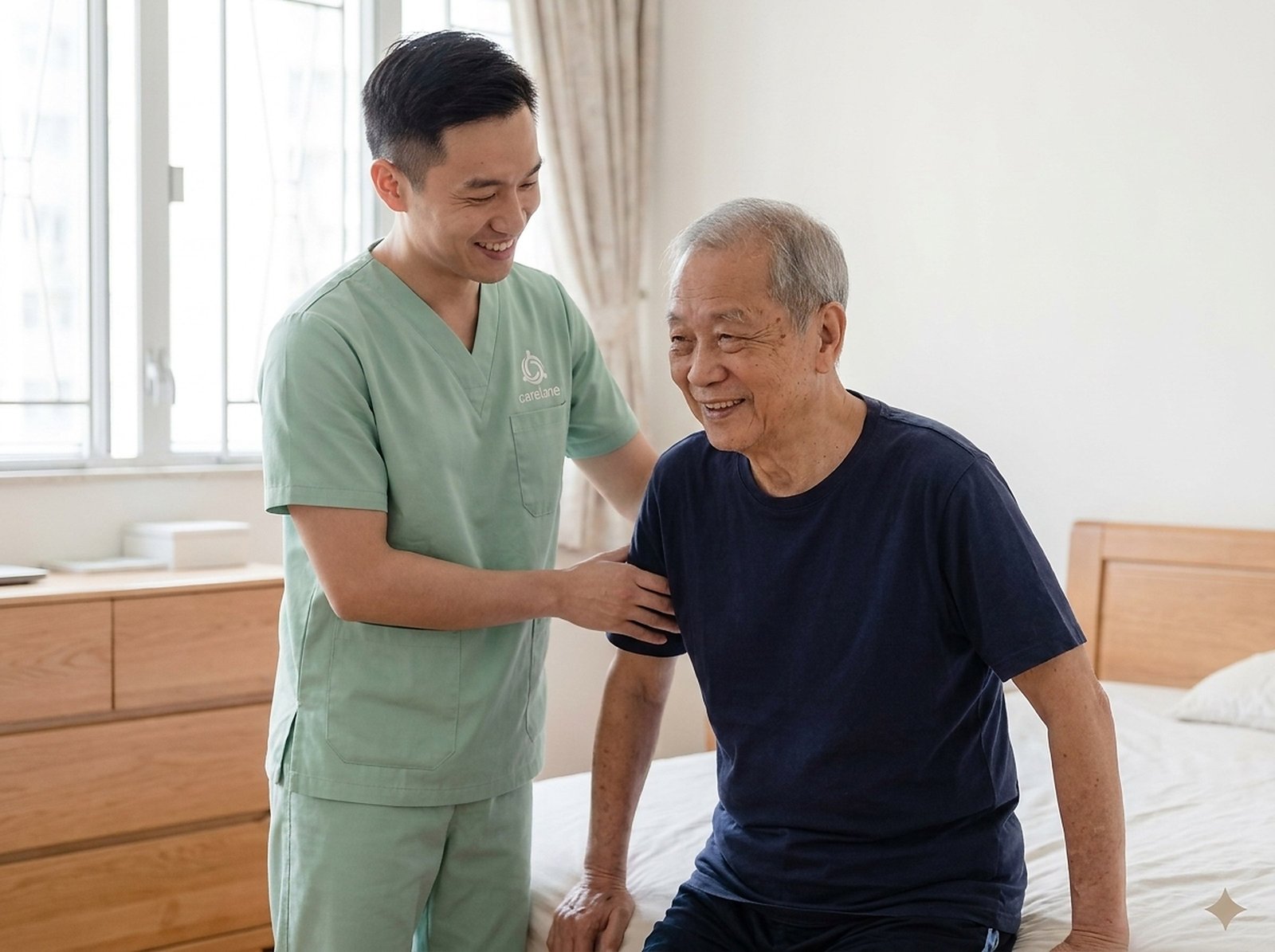
Start with bed mobility, sit-to-stand transfers and basic activity to reduce decline after bed rest.
Leads assessment, treatment planning and progress review.
Assists training under therapist direction.
Supports daily activity, transfers and exercise reminders.
Simple measures record trends for family follow-up.
The physiotherapist assesses, sets the training plan and reviews progress; the physiotherapy assistant carries out the training at home to that plan. All rates below include the home visit and basic assessment and training equipment used during the visit; aids or products left for the family are quoted separately — no call-out fee.
One rate for assessment and treatment
1 hour per session · first assessment usually 1–1.5 hours
at least 4 sessions of the same eligible service prepaid in full, HK$900 each10% off
A Hong Kong registered physiotherapist visits, assesses, sets the plan for the elder’s situation, and reviews and adjusts it as things change.
Carries out the therapist’s plan
Minimum 1.5 hours · about HK$270 from, per session
at least 4 sessions of the same eligible service prepaid in full, 10% off per hour10% off
Training works through frequency and consistency, not the length of any one session. 1.5 hours is what a full session takes — warm-up, the prescribed exercises, then a word with the family. Regular assistant visits under the therapist’s plan keep the training frequent while the long-run cost stays manageable.
Every visit is made by a registered physiotherapist or a therapy assistant working to the therapist’s written plan. Travel is already included.
The physiotherapist assesses first and writes the training plan, the assistant then delivers it at home, and the therapist reviews at intervals. This is the combination families most often use: it keeps the number of training sessions up while holding the cost down.
On twice-a-week training, about HK$2,950 a month (8 assistant sessions totalling 12 hours, plus one therapist review at HK$1,000).
The services above are personal care, nursing procedures and rehabilitation training carried out as instructed by medical staff. They are not medical diagnosis or treatment and do not replace your attending doctor. The 10% discount requires full upfront payment for at least four visits of the same eligible service. There is no expiry date. If the arrangement stops early, completed services and applicable cancellation fees are deducted at standard rates and the balance is refunded. Cancellation with less than 24 hours’ notice costs half the standard fee for that visit; cancellation at least 24 hours ahead is free. Non-prepaid services use standard rates and the usual payment arrangements.
It depends on condition and practice frequency. Safety and function usually improve first.
Most sessions can start with home space and simple items.
Home visits focus on the actual environment and daily movement.
Help with exercise reminders, tidying routes and safety observation.
Please WhatsApp for a quote based on area, duration and needs.
We first understand the condition and goals, then suggest suitable support. Phone / WhatsApp: 9185 5217. A first enquiry can start with a free preliminary phone assessment — 10 to 15 minutes, no charge, and no obligation to book.
The 10% discount requires full upfront payment for at least four visits of the same eligible service. There is no expiry date. If the arrangement stops early, completed services and applicable cancellation fees are deducted at standard rates and the balance is refunded. Cancellation with less than 24 hours’ notice costs half the standard fee for that visit; cancellation at least 24 hours ahead is free. Non-prepaid services use standard rates and the usual payment arrangements.
Eligible services: wound care, nasogastric tube replacement, physiotherapy, occupational therapy, speech therapy, therapy assistants and nutrition support. Home care, health workers, housekeeping and medical escort do not automatically qualify; quotations identify the eligible service and number of visits.
We aim to arrange the same staff member, but may change staff according to availability and will notify you beforehand. Basic assessment and training equipment used during the home visit is included; aids or products left for the family require a separate quotation.