After a StrokeThe Whole Family Reorganises
CareLane works in three stages — early discharge, active rehabilitation and the settled phase — arranging nurse assessment, physiotherapy, occupational therapy, assistant-led practice and home care, while coordinating follow-ups and home safety changes. Everything follows the treating medical team.

Common changes after stroke
Care is not only about limbs. Eating, communication and mood also need support.
Limb weakness
Getting up, walking or turning may become difficult.
Needs daily help
Toileting, bathing, dressing or eating may need support.
Speech & swallowing
Speech may be unclear, or coughing may occur during meals.
Emotional stress
Older adults may feel low, while families also carry stress.
Who is it for?
Recently discharged stroke survivor
Needs a safe transition and home care plan.
One-sided weakness
Getting up, transferring or walking needs support.
Swallowing difficulty
Coughing during meals needs careful risk observation.
Speech difficulty
Speaking or understanding is slower and needs patience.
Needs rehab coordination
Continue physiotherapy, speech or functional training at home.
Caregiver pressure
Family needs skills guidance and respite support.
Three rehabilitation stages
Each stage has different goals. Support should change with the older adult's condition.
Stabilize safety first
Start with safe transfers, basic care and home risk review.
- Transfers and fall prevention
- Basic health monitoring
- Home movement review
Rebuild function
Gradually add mobility, daily function, swallowing and communication training.
- Physiotherapy and OT
- Speech and swallowing support
- Daily training routine
Prevent decline and falls
Maintain gains and adjust care priorities as the body changes.
- Function maintenance
- Family skills training
- Ongoing progress tracking
Multidisciplinary teamwork
Nursing and care team
Assess health risks, manage wounds and tubes, and coordinate daily care with rehabilitation arrangements.
Physiotherapy
Strength, balance, walking and fall-prevention training.
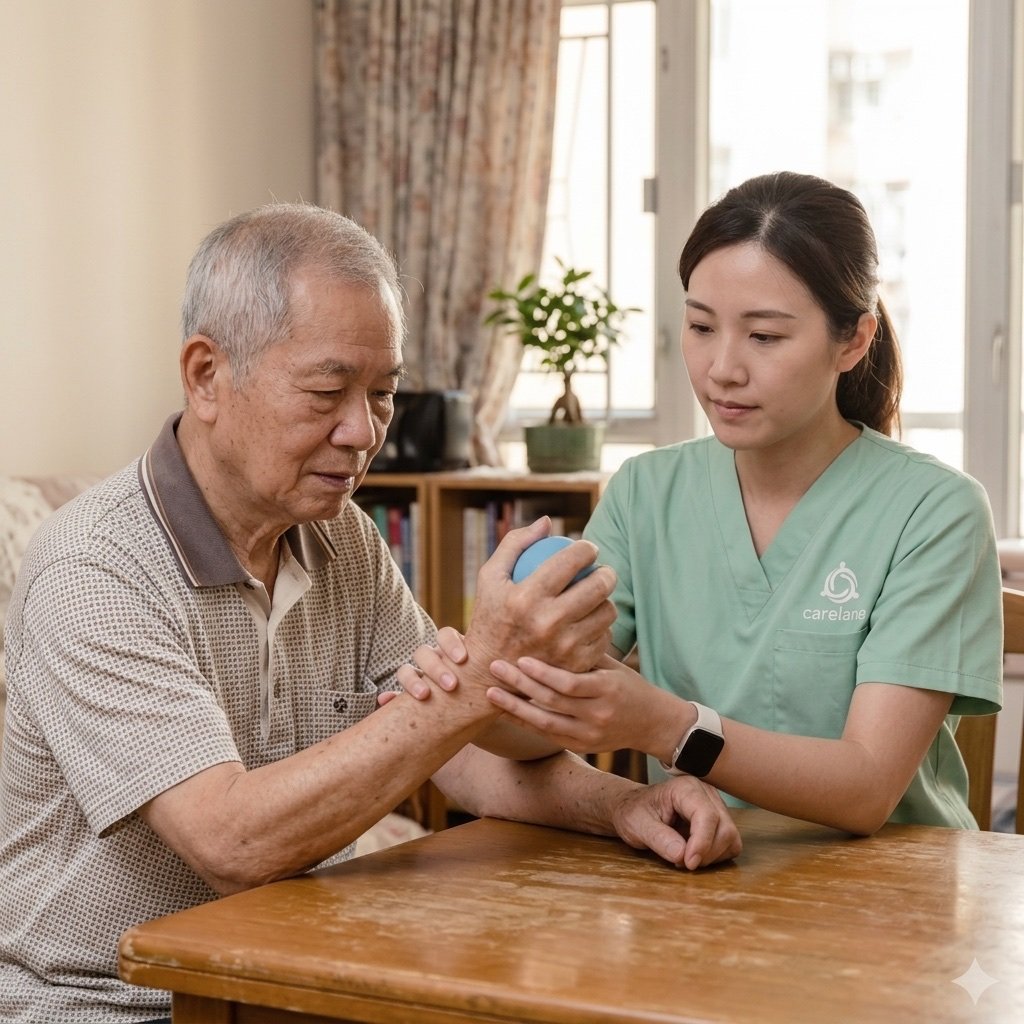
Occupational Therapy
Training for daily functions such as dressing, eating and toileting.
Speech and nutrition
Support swallowing, communication and meal texture.
Training in daily life
Each exercise is designed to be practical at home. Caregivers can learn together.
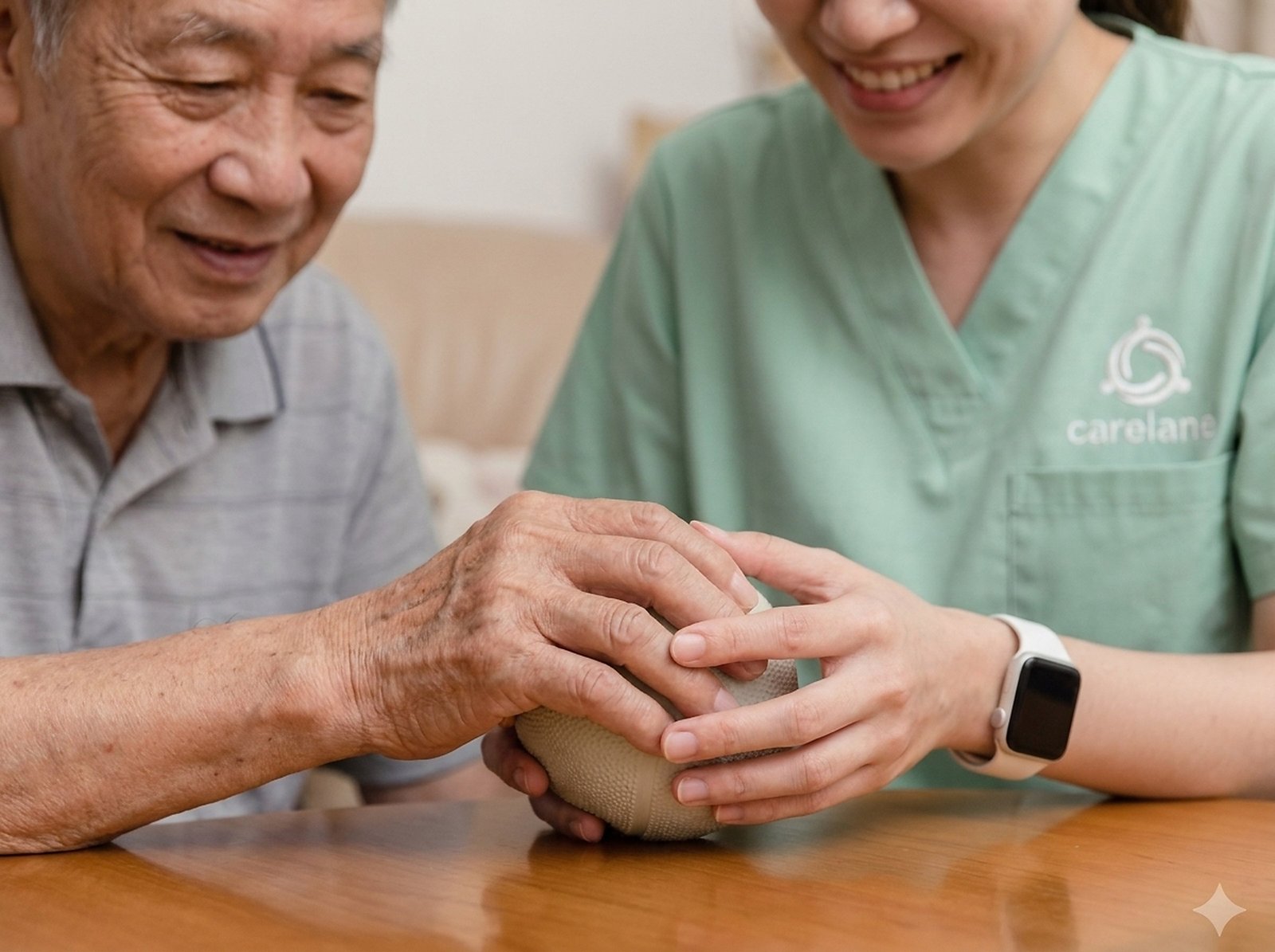
Hand grip
Practise finger control and strength step by step.
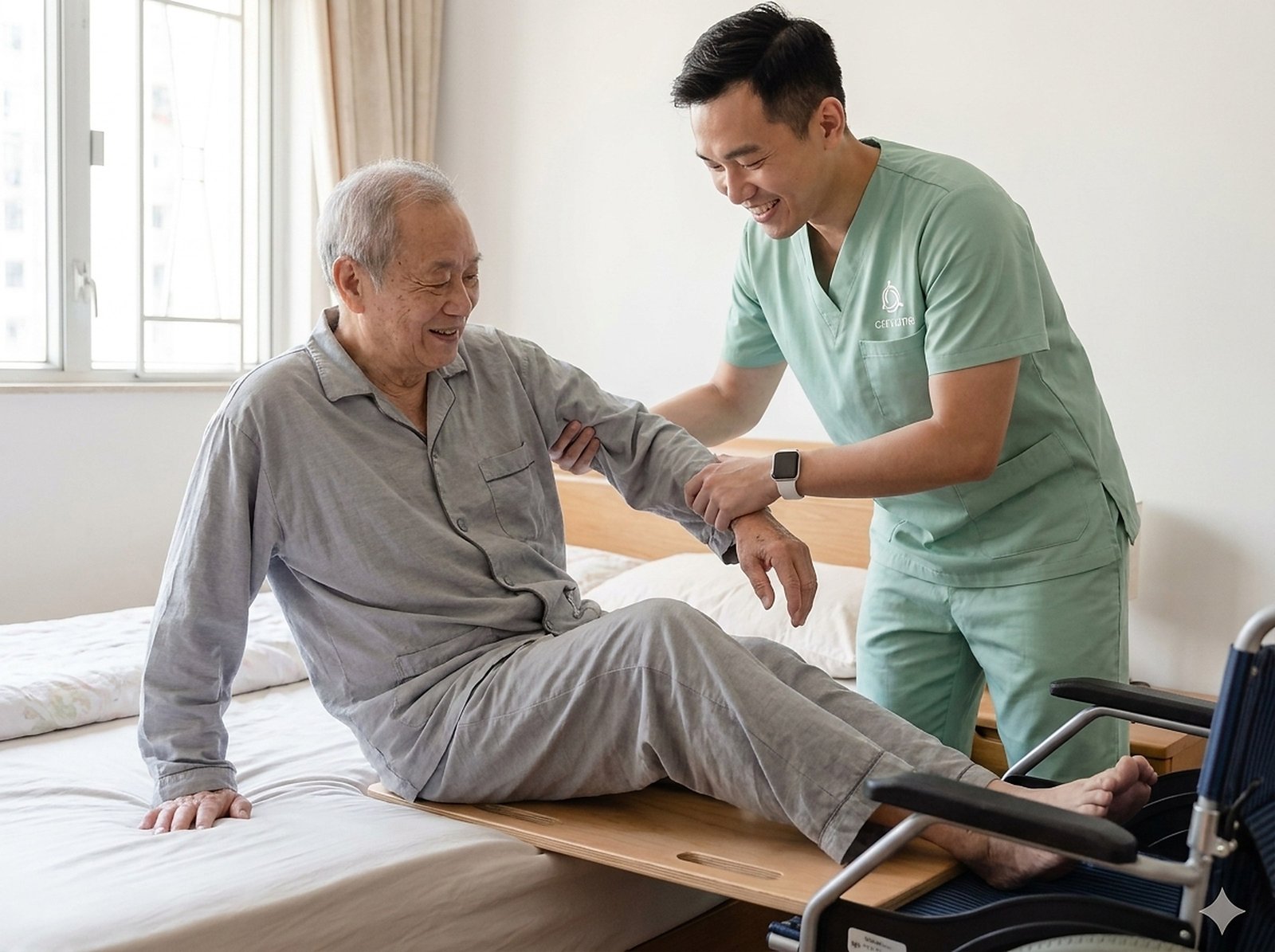
Safe transfers
Practise bed-chair transfers to reduce fall risk.
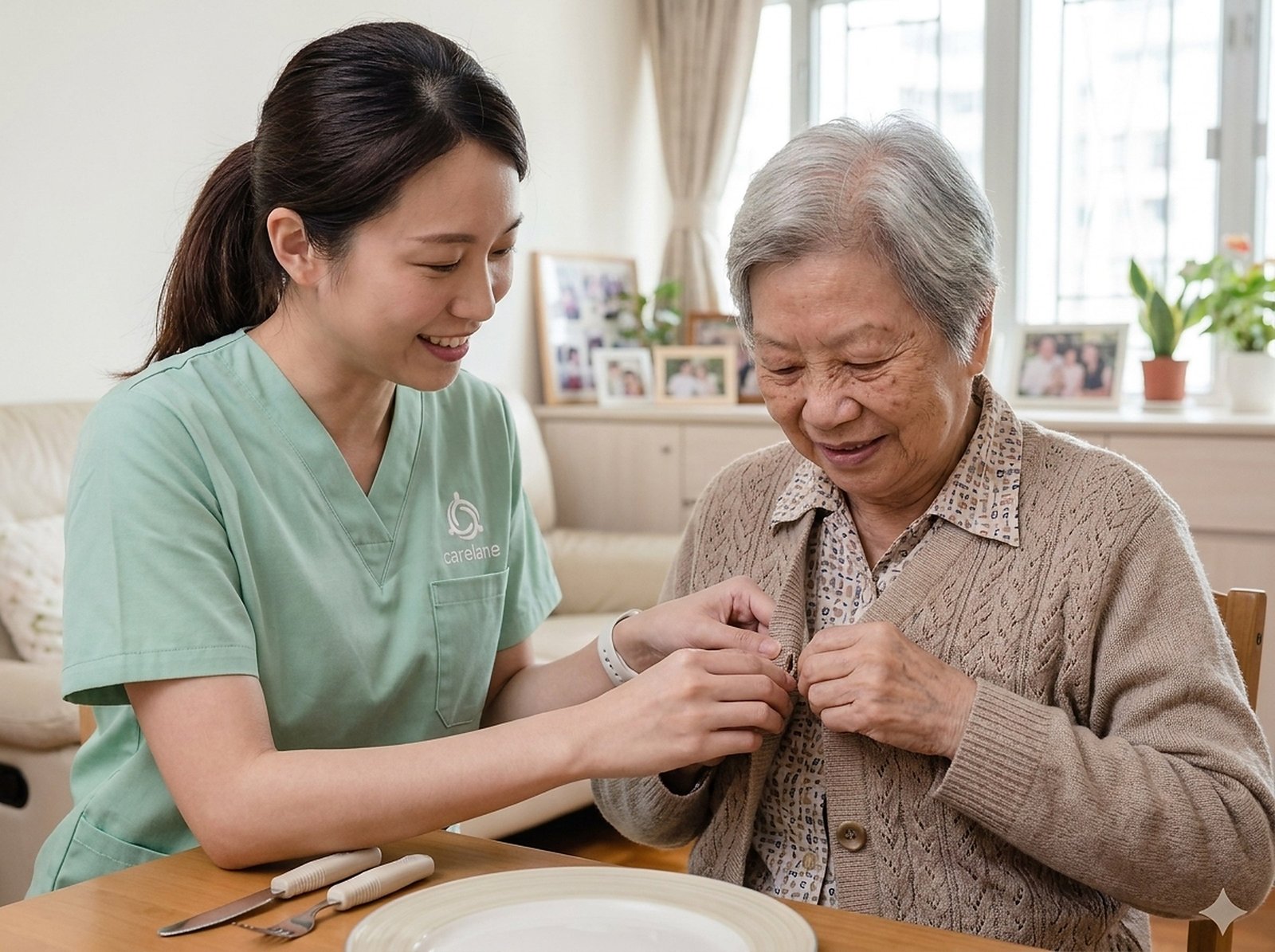
Daily function
Turn dressing, eating and toileting into training.

Family skills
Learn transfers, fall prevention, communication and emotional support.
Stroke care plans
Transition care
- Home risk assessment
- Transfer and daily care
- Basic health monitoring
- Home safety advice
Rehabilitation plan
- Multidisciplinary assessment
- Physiotherapy and OT
- Speech and swallowing support
- Stage-by-stage review
Maintenance plan
- Regular function review
- Daily rehab maintenance
- Fall prevention and home safety
- Ongoing family support
Care team
Combine nursing, rehabilitation and daily care by stroke stage.
Registered Nurse (RN)
Coordinates risk observation, medication and the care plan.
Physiotherapist (PT) / Speech Therapist (ST)
Adds walking, swallowing and communication training.
Health Care Worker (HCW)
Supports daily routines, transfers and meal observation.
Why CareLane
Nursing, rehabilitation and care records connect smoothly.
Training is designed around daily living.
We watch coughing, appetite and meal texture.
Families learn transfers, fall prevention and communication skills.
The first month home, priced up front
One lead physiotherapist plus two other roles. The plans below are the combinations families most often choose, shown for reference — items and visit counts can be adjusted after assessment. Each plan states the number of visits, the total hours and the total price.
Stroke — first month home
Therapist sets the plan, assistant delivers it
Physiotherapy assistant at home · minimum 1.5 hours
The physiotherapist sets the training direction, a nurse carries out one home assessment, and the assistant runs the day-to-day practice.
- Physiotherapist at home · HK$1,000 / session
- Physiotherapy assistant · HK$180–220 / hour
- Nurse home assessment · HK$1,000 / visit
- Twice a week · from about HK$540 a week
Ongoing rehabilitation — monthly
Direction set, now keeping it going
Home carer · minimum 3 hours · adjustable month to month
Once the direction is set, the assistant visits twice a week to keep the practice going and the therapist reviews once a month.
- Home carer · HK$140–160 / hour
- Health worker · HK$150–200 / hour
- Physiotherapy assistant · HK$180–220 / hour
- Monthly physiotherapist review · HK$1,000 / session
Staff and reference rates
The arrangement below is what families most often choose after a stroke. It is a reference, not a fixed package — staff type, visit count and hours are set after assessment.
1 hour eachHK$1,000 / session · about HK$1,000 a month
1.5 hours eachHK$180–220 / hour · about HK$540 a week
1 hourHK$1,000 / visit · written report
The table above shows the arrangements families most often choose and is for reference only — the staff type, the number of visits and the hours can all be adjusted after assessment, and you are charged for what is actually arranged. The 10% discount requires full upfront payment for at least four visits of the same eligible service. There is no expiry date. If the arrangement stops early, completed services and applicable cancellation fees are deducted at standard rates and the balance is refunded. Cancellation with less than 24 hours’ notice costs half the standard fee for that visit; cancellation at least 24 hours ahead is free. Non-prepaid services use standard rates and the usual payment arrangements. Aids, home modification work and third-party charges are not included; these are quoted first for the family to decide on.
After the first month, ongoing care is charged at item rates — home carer from HK$140 an hour, therapy assistant from HK$180 an hour. The services above are personal care, nursing procedures and rehabilitation training carried out as instructed by medical staff. They are not medical diagnosis or treatment and do not replace your attending doctor. Where at least 4 visits of the same eligible service prepaid in full, 10% is taken off each visit. There is full upfront payment required for the discount and nothing expires — Early termination is settled at standard rates before refunding the balance.
FAQ
How soon should rehabilitation start?
After discharge, build a safe training rhythm as early as medical advice allows.
Can stroke rehab happen at home?
A qualified Physiotherapist can assess whether home-based walking and balance training is appropriate.
How are swallowing risks handled?
If coughing or a wet voice occurs during meals, stop and seek advice from the treating team or a qualified Speech Therapist before changing food or fluid texture.
What are signs of another stroke?
If facial droop, new limb weakness, unclear speech or another sudden stroke sign occurs, call 999 immediately. Do not wait for a home-care assessment.
How does the team coordinate?
Records and role responsibilities are agreed according to the care plan. Each professional works within their own scope.
Need stable stroke care?
We first understand the stroke stage and family needs, then suggest a suitable plan. Phone / WhatsApp: 9185 5217. A first enquiry can start with a free preliminary phone assessment: 10 to 15 minutes to talk through the direction and the likely monthly cost, at no charge.
Prepaid discount, refunds and staffing
The 10% discount requires full upfront payment for at least four visits of the same eligible service. There is no expiry date. If the arrangement stops early, completed services and applicable cancellation fees are deducted at standard rates and the balance is refunded. Cancellation with less than 24 hours’ notice costs half the standard fee for that visit; cancellation at least 24 hours ahead is free. Non-prepaid services use standard rates and the usual payment arrangements.
Eligible services: wound care, nasogastric tube replacement, physiotherapy, occupational therapy, speech therapy, therapy assistants and nutrition support. Home care, health workers, housekeeping and medical escort do not automatically qualify; quotations identify the eligible service and number of visits.
We aim to arrange the same staff member, but may change staff according to availability and will notify you beforehand. Basic assessment and training equipment used during the home visit is included; aids or products left for the family require a separate quotation.